
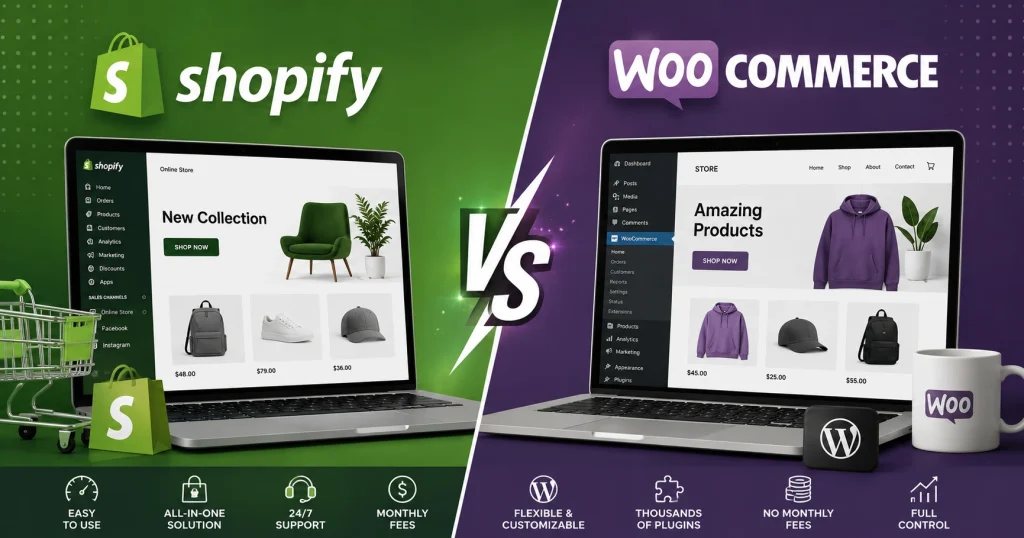
Online selling is booming this year. More people are opening online stores than ever before. Two names come up again and again: Shopify and WooCommerce. Both help you build a store. But they work in very different ways. This report breaks down the real differences, so you can pick the right one for your business.
Starting an online store used to feel hard. You needed coders, servers, and a big budget. That is not true anymore. Today, two platforms lead the market. Shopify is a paid, ready-made system. WooCommerce is a free tool that runs on WordPress. Millions of stores use one of these two. But which one is better for you? That depends on your budget, your tech skills, and your business goals. Let’s look at the facts.
What Is Shopify?
Shopify is an all-in-one platform. You sign up, pay a monthly fee, and get a store instantly. There is no need to buy hosting. There is no need to install anything. Shopify handles the technical side for you. This makes it a top choice for busy store owners.
Shopify plans start low and grow with your business. The Basic plan costs around $39 a month, or less if you pay yearly. New users usually get a short free trial before they pay anything. Bigger stores can move up to higher plans like Grow or Advanced as sales increase. These higher tiers come with lower transaction fees and more advanced tools built for growing businesses.
What Is WooCommerce?
WooCommerce is different. It is a free plugin. It works only with WordPress websites. You install WordPress first. Then you add the WooCommerce plugin on top. This gives you a full online store, built inside your website.
The plugin itself does not cost money. But you still need to pay for other things. You need web hosting. You may need a domain name. You may also want extra add-ons for payments, shipping, or design. So “free” does not always mean zero cost.
Cost Comparison
Money matters a lot when picking a platform. Here is a quick look at typical costs.
| Feature | Shopify | WooCommerce |
|---|---|---|
| Monthly platform fee | Starts around $39/month | Free plugin |
| Hosting | Included | You pay separately |
| Setup difficulty | Very easy | Needs more steps |
| Transaction fees | May apply, lower on higher plans | Depends on payment gateway |
| Themes and plugins | Many free and paid options | Thousands of free and paid options |
Shopify feels easy on the wallet because everything is in one bill. WooCommerce can be cheaper at the start, but hosting, plugins, and expert help can add up over time.
Ease of Use
This is where the two platforms differ the most. Shopify was built for regular people, not coders. You can build a store in one day. Drag, drop, and publish. It is a simple system with clear steps.
WooCommerce takes more effort. You need basic knowledge of WordPress. You may need help from a developer for advanced changes. It gives you more control, but the setup is not as quick. Beginners may find it harder at first.
Design and Customisation
Shopify offers a solid set of themes. Most are simple to edit using its built-in tools. You do not need coding skills for basic changes. But deep customisation may need Shopify’s own coding language, called Liquid.
WooCommerce runs on WordPress, and WordPress is famous for design freedom. Shopify also has a large app store and plenty of tools for extra customisation, so it still holds its own here. But WooCommerce goes further. It gives near-total control over how your store looks and works, especially if you know some code.
Payment Options
Shopify has its own payment system called Shopify Payments. You can also connect other gateways, but extra fees may apply in that case. It keeps checkout simple for shoppers.
WooCommerce lets you connect almost any payment gateway. PayPal, Stripe, and many local options work well with it. There are no forced fees from WooCommerce itself. This makes it flexible for stores serving different countries.
Security and Maintenance
Shopify takes care of security updates, backups, and server issues. You do not have to worry about hacking risks from outdated software. This is one less job for a busy store owner.
WooCommerce puts that job on you. You must update WordPress, the plugin, and other add-ons regularly. If you skip updates, your store could face security risks. This needs more attention and maybe some technical help.
Which One Grows Better?
Both platforms can grow with a business. Shopify is built to scale smoothly. As orders rise, Shopify’s servers handle the load without extra work from you. Its plans cover every stage of growth, from small stores on the Basic tier to large enterprise stores on Shopify Plus.
WooCommerce can also scale, but it depends on your hosting plan. A bigger store needs stronger hosting. If your host cannot handle heavy traffic, your site may slow down or crash during busy sales.
Who Should Choose Shopify?
Shopify works best for:
- New store owners with no tech background
- People who want a fast and simple setup
- Businesses that want one bill for everything
- Sellers who want strong built-in support
Who Should Choose WooCommerce?
WooCommerce works best for:
- Store owners already using WordPress
- Businesses that want full design freedom
- Sellers on a tighter starting budget
- People comfortable with some technical work
Support System
Shopify offers direct customer support. You can reach their team through chat or email almost any time. This is helpful when something goes wrong during a sale.
WooCommerce does not have one central support team. Since it is open-source, help comes from community forums, guides, and paid WordPress experts. This can take longer to solve urgent problems.
Final Comparison Table
| Point | Shopify | WooCommerce |
|---|---|---|
| Best for | Beginners, fast setup | Coders, design freedom |
| Hosting | Built-in | Separate purchase |
| Support | Direct company support | Community-based |
| Control | Limited but simple | High but complex |
| Growth | Handled automatically | Depends on hosting |
Choosing between these two platforms comes down to your comfort with technology and your budget plan. Some sellers pick Shopify for its easy setup. Others pick WooCommerce for its low starting cost and open design. Many experts suggest testing free trials or demo sites of both before making a final call, since real hands-on use shows the true experience better than any list of features.
FAQs
1. Is Shopify better than WooCommerce for beginners?
Yes, Shopify is easier for beginners because it needs no coding and sets up fast.
2. Is WooCommerce really free to use?
The plugin is free, but hosting, domain, and some add-ons still cost money.
3. Can I switch from WooCommerce to Shopify later?
Yes, store owners can move their products and data to Shopify, though it takes some planning.
4. Which platform is more secure?
Shopify handles security automatically, while WooCommerce needs manual updates to stay safe.